

The truth about Mindvalley will help you know if you should invest your money in this platform. And, in this Mindvalley review, I’ve answered questions such as, is Mindvalley a scam? Is it Legit? And most importantly, is Mindvalley actually worth it?
How did I get started with Mindvalley (Worth 2 Mins Reading)
When you search Mindvalley reviews Reddit or Mindvalley reviews Trustpilot, you will see all the biased reviews. Therefore, this article will spotlight the reality of Mindvalley based on my experience after taking multiple Mindvalley courses.
The Truth About Mindvalley – My Review (After Using for 12 Months)
Mindvalley is a well-known online learning platform that offers 50+ mind, body, soul, and self-improvement courses from the world’s best leaders and motivational speakers.
Vishen Lakhiani, the man behind Mindvalley, aims to provide courses that are not taught in the school.
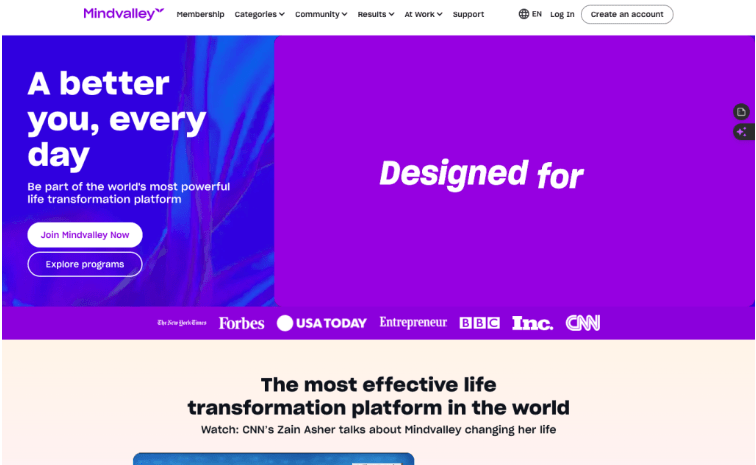
The courses aim to transform your life spiritually and uplift your inner self with the world’s best experts. The courses are divided into body, mind, relationships, etc., and you can easily pick the one that fits your criteria.
One aspect that differentiates Mindvalley from other online learning platforms is that Mindvalley provides the world’s best teachers. The courses are designed with the highest quality content.
Mindvalley’s motto is providing transformative learning, which aims to bring the best version of yourself in all areas of your life.
Mindvalley has 12+ million students worldwide and comes with a 22-minute-long assessment test that evaluates which parts of your life need evaluation. While most courses are paid, Mindvalley also provides free courses. Additionally, there is a 15-day risk-free money-back guarantee with individual quests and the all-access pass.
Moreover, Mindvalley has introduced the mobile app, which is easily accessible, and you can take classes right from your mobile. You can also get Mindvallely at $199 and get courses at an affordable price.
Lastly, it also conducts daily live classes from experts and celebrities across the globe. Some of the guests in live sessions were/are Priyanka Chopra Jonas, Maye Musk, Jay Shetty, etc. I even looked for Mindvalley review complaints but could not find many bad things.
Is Mindvalley Scam?
Mindvalley is not a scam, and I say this after taking the courses. Mindvalley does have poor customer service, and I hope they work on improving it, but calling the platform a ‘scam’ isn’t appropriate.
Do I hate Mindvalley? No, it’s because the courses are helpful. Sure, they don’t change your life. After all, whose life has been changed by a course unless they don’t put in effort?
A few courses that I followed properly helped me, and I noticed improvements. More like I gained a new perspective. On the other hand, I didn’t pay attention to other courses, and the results were nowhere to be found.
So, I still feel Mindvalley courses do not transform your life, but they give you a direction to move forward and think about.
Mindvalley: Pros And Cons
It is no surprise that Mindvalley is an excellent online learning platform, but there are also drawbacks with the pros.
Let’s take a look at Mindvalley’s pros and cons below.
Pros:
- Teachers of Mindvalley are experts from the field who help you dive into the most profound forms of healing and utmost transformation.
- Video lessons are practical, insightful, and extremely high quality.
- Courses are easy and effective to get started with. All you need is to spend 20 minutes learning new things.
- Courses are designed for everyone. There is no age restriction on who can join.
- Mindvalley offers a 15-day money-back guarantee. If you do not enjoy Mindvalley, you can request a refund by contacting the support team.
- Mindvalley has a vast global community of learners. You can build your network, talk to people worldwide, and engage in daily conversations with people.
Cons:
- Courses can be expensive when purchased separately. Choosing individual courses will cost hundreds of dollars.
- While other e-learning platforms offer a 30-day money-back guarantee, Mindvalley offers only a 15-day guarantee.
Mindvalley Instructors (My Opinion)
While exploring Mindvalley, I was curious about who the teachers would be. Unlike other e-learning platforms, at first, I thought the teachers would be ordinary people with experience in the field.
However, one of the best things I discovered is that Mindvalley offers instructors who are experts and well-known in self-improvement and spirituality.
I never heard the names of the instructors, mainly because they aren’t celebrities. Still, when I checked each instructor on Google, I was fascinated because most instructors are motivational speakers, researchers, authors, and others who are experts in the field.
Some of the leading teachers include:
- Robin Sharma is the famous author of the book ‘The Monk Who Sold His Ferrari.’
- Jim Kwik is an expert on brain training and mind hacking.
- Neale Donald Walsch is a famous spiritualist and author of ‘Conversations with God.’
- Ken Honda -Best-selling author of ‘Making Peace of Your Money.’
- Vishen Lakhiani -The founder of Mindvalley.
- Lisa Nicholas -Motivational speaker and influencer.
- Steven Kotler -Award-winning neuroscience expert.
- Srikumar Rao -Leading MBA lecturer.
And the list goes on of the instructors.
I think Instructors is where Mindvalley exiles and leaves other learning platforms behind.
With these top-list instructors, you learn from their personal experiences and adapt their lessons with the utmost goal of self-improvement and healing.
Mindvalley Courses: Are Mindvalley Courses Legit?
Mindvalley offers the world’s best courses in each human transformation and entrepreneurship category.
The courses are offered in broad areas of transformation, including focus, leadership skills, manifesting dreams, alternative healing, deep sleep, confidence, self-love, overcoming fears and anxiety, and more.
The courses by Mindvalley are known as ‘quests.’ Currently, more than 50 quests are available, and MindValley keeps adding more from time to time.
All the courses are divided into various categories. There are seven categories; however, some courses may be in multiple categories.
Let’s take a look at the categories and some of the popular courses included in these categories:
1. Body
The quests in the body focus on maintaining a healthy body without age restrictions, dieting, or heavy exercising.

The famous courses in the body categories include:
- The Longevity Blueprint -Ben Greenfield.
- Advanced Home Workouts -Ronan Oliveria.
- The Mastery Of Deep Sleep -Dr. Michael Bresus.
- 10X -Ronan Diego de Oliveria.
- Total transformation Training -Christine Bullock.
2. Mind
The quests in the Mind category emphasize upgrading your beliefs and inner programming. The courses aim at returning your mindset and harnessing your mind to transform your reality.

Some of the popular courses include:
- Superbrain -Jim Kwik
- Uncompromised Life -Marisa Peer
- Be Extraordinary -Vishen Lakhiani
- The M Word -Emily Fletcher.
- Everyday Bliss -Paul McKenna.
3. Soul
The courses in this category aim to explore your inner world and reconnect with your essence. With these courses, you can access infinite peace, inspiration, clarity, and intuition.

Some of the popular courses include:
- Duality -Jeffry Allen.
- Energy Medicine -Donna Eden.
- Life Visioning Mastery -Michael Beckwith.
- Chakra Healing -Anodea Judith.
- Awaken The Species -Neale Donald Walsch.
4. Career
A career is one of the most crucial aspects of everyone’s life. Through these courses, Mindvalley focuses on becoming a legendary leader, achieving financial freedom, and Mastering the art of influence, persuasion, and public speaking.

The courses include:
- Speak And Inspire -Lisa Nicholas.
- Hero. Genius. Legend. -Robin Sharma.
- The Habit Of Ferocity -Steven Kotler.
- Money EQ -Ken Honda.
- Becoming Focused And Indistractable -Nir Eyal.
5. Entrepreneurship
The entrepreneurship quests aim to discover how to design your career of fulfillment, original purpose, and impact.

Some of the courses are:
- The Quest Of Personal Mastery -Dr. Srikumar Rao.
- Business Freedom Blueprint -Eric Edmeades.
- The Power Of Boldness -Naveen Jain.
- Ultimate Leadership -Ketih Ferrazzi.
- Vivid Vision -Cameron Herold.
6. Relationships
Whether it’s a relationship with your parents or your partner, Mindvalley aims to communicate with empathy and compassion.

The courses include:
- Conscious Uncoupling -Katherine Woodward Thomas.
- Mastering authentic networking -Keith Ferrazzi.
- The Energies Of Love -Donna Eden and David Feinstein.
- Tantra Touch -Psalm Isadora.
7. Kids, Teens, And Parenting
Parenting is more than just giving your kids financial support. As your kid grows up and becomes a teenager, their demands and beliefs change over time.
Master the art of parenting and give your kids and teenagers the ideal path of growth and success.
Popular courses include:
- Conscious Parenting Mastery -Dr. Shefali Tsabary.
- Be Extraordinary For Teens -Vishen Lakhiani.
- Creating Friendships And Deep Connections For Teens -Gahmy Drummond-Bey.
Mindvalley: What Are The Classes Like (My Verdict)
Now that you know about the courses offered by Mindvalley, you must be wondering, ‘What are the classes like?’ will you be able to remove time from your busy schedule?
One of the best parts about Mindvalley classes is that you do not need to spend hours learning the best for you; you only need to remove 20 minutes of your day.
You can access Mindvalley by logging in and selecting a course. Each course has different learning hours. Some have 6 training hours, while others have 8-9 hours.
Signing up and getting started was quick and straightforward. I took up the Superbrain course by Jim Kwik. As I passed some classes, I noticed changes in my memory and mind power.
The classes gave me the strength to gain confidence and unleash the power of my brain.
Additionally, thousands of students take classes like you, so you can quickly build your network and communicate with people worldwide.
There are also assignments and tests between the courses that help you bring what you have learned into practical life.
You can take classes from your computer, TV, laptop, or mobile. One of the best parts about the Mindvalley classes is that you do not need to sit in a specific environment with a table and chair; you can take the classes anywhere.
Whether traveling or sitting on your couch, you can take the courses anywhere. Besides my school and work, I can still take classes without worrying about missing out on my studies.
Mindvalley Courses: My Top 3 Recommendations
Now that you know the courses and classes, choosing the right course can be challenging. Out of all the courses, how do you know which course you should pick?
Therefore, based on my experience with Mindvalley, here are my top three recommendations that you can try. Get the list of all Mindvalley courses which I have reviewed in a different post.
1. Superbrain By Jim Kwik
| Total time | 8.5 hours of training |
| Best for | Users looking to transform their brain to focus, be energized, and unlock their super brain powers. |
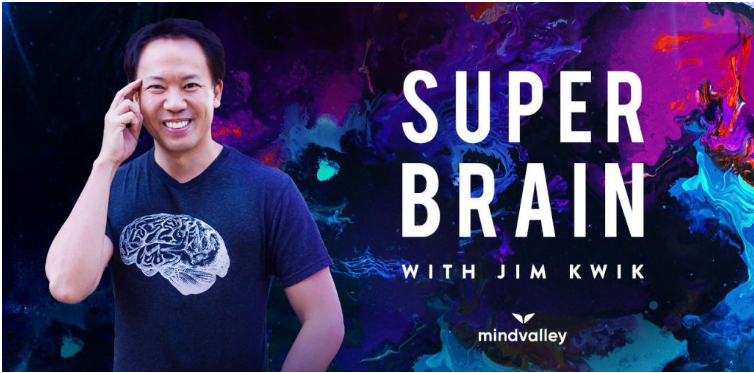
I had heard about Jim Kwik before taking the course. Plus, when I saw that his course was the most famous quest on Mindvalley, I was curious to take it.
The course is designed to activate your brain’s unlimited potential. The course takes you on a 30-day adventure towards building unshakable and bulletproof memory and focuses on human brain productivity.
With the superbrain program, I could adapt the practical skills as promised by the quest. On completion, I can safely say that the course helped me improve my focus and reduce the lack of focus that I used to face now and then.
2. The Silva Ultramind System by Vishen Lakhiani
| Total Time | 11.6 hours |
| Best for | Unlocking your mind’s full potential to enhance intuition, creativity, and goal achievement. |
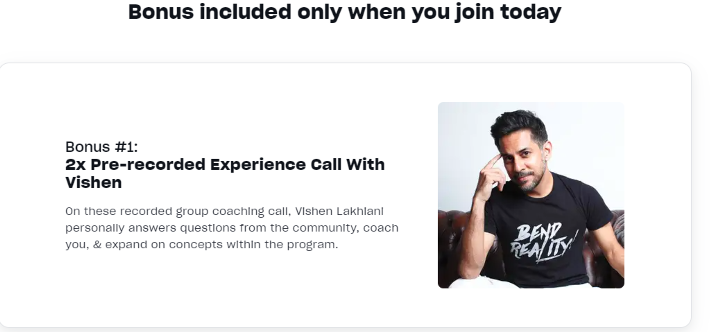
The Silva Ultramind System on Mindvalley is a revolutionary program based on the acclaimed Silva Method, designed to unlock your mind’s potential.
This course empowers individuals to access altered states of consciousness, enhancing intuition, creativity, and problem-solving. With over 363,000 students enrolled, it offers tools for personal and professional growth.
This Mindvalley course is by the founder of Mindvalley itself. It is all about redesigning your life and evolving the level of consciousness you operate from.
3. Everyday Bliss By Paul McKenna
| Total Time | 3.5 hours (split in 21 day) |
| Best for | Practical techniques to manage anxiety, hypnotherapy, NLP-based personal growth tools |
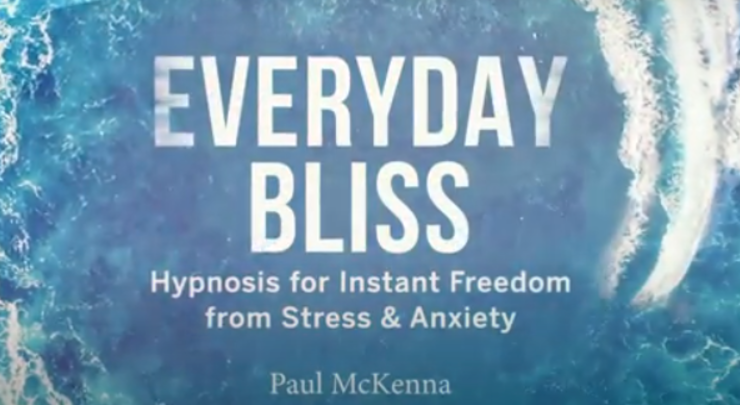
All the Everyday Bliss reviews highlight its transformative impact on stress and mental well-being. Paul McKenna designed this 21-day Mindvalley program to help users with hypnotherapy and NLP techniques to replace stress with calm and productivity.
With over 75,000 students enrolled, it offers instant access to tools like Hypnotic Trance and Havening. Many Mindvalley Paul Mckenna reviews praise improved sleep, reduced anxiety, and increased joy.
So, if you are wondering, “is everyday bliss worth it?” my answer is yes. Also, when you have a membership, the program costs you approximately $1/ day, which makes it valuable.
Mindvalley Pricing: How Much Does Mindvalley Cost Per Year?
To access the Mindvalley courses, you can either purchase each course separately or purchase an annual all-access pass.
Each course is priced differently. For example, let’s consider Superbrain by Jim Kwik. The course is priced at $499.
When you purchase an individual course, you get access to the course for a lifetime.
So, if you ever feel like retaking the entire course, you can take it anytime with the material available to you for life.
Similarly, to get a Mindvalley membership discount pass, you need to pay only $399 per year, which will give you access to all the Mindvalley courses.
You can opt for Mindvalley all-access monthly at $99/month, whereas you can grab it at $41.60/month when billed annually.
Besides, you get more than just access to courses. The next section will discuss what’s included in the membership plan. You can check out some of the known Mindvalley alternatives which you can try.
Is Mindvalley A Good Investment?
Mindvalley’s all-access plan is the perfect deal for anyone looking for a money-saving option.
The all-access pass gives you access to Mindvalley’s 50+ quests, weekly live chats and workshops, a private student network, and more.
In addition, you also get access to all the new courses that Mindvalley introduces during your membership. Remember, the all-access pass is valid for a year only.
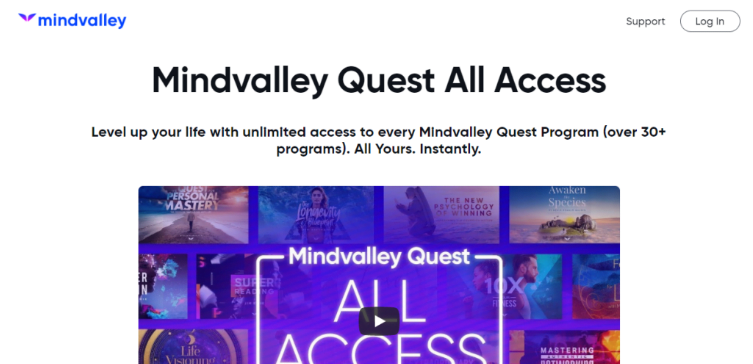
You can pay for all access either monthly or yearly. The monthly plan states at $99/month. You must be thinking, is an All-access pass worth it?
The answer is yes, it is. Consider this example: grabbing two Mindvalley quests will cost you around $1000. At the same time, you can grab access to all the courses for a year at just $499, half the price of the individual courses.
One of the best parts about an all-access pass is that you can save hundreds of dollars and enroll in multiple courses at once.
I went for the all-access pass as it gave me more freedom to choose any quest I liked at an affordable price. If you are thinking of exploring Mindvalley, I recommend going with an all-access pass.
Sharing My Experience With Mindvalley
Mindvalley holds a special place in my life. The courses have helped me uplift my fears and understand my true self.
I decided to take up Marisa Peer’s Uncompromised Life course. Marisa Peer and her teaching methods attracted me while picking the right course.
Starting up with the course was effortless. Later, as I started the classes, I loved how the classes and modules were extremely flexible. I could take classes while waiting for the bus to arrive or even during the breaks of my working hours.
I often spent time thinking about my purpose and why I am here, but as I dwelled in the course, I got a crystal clear idea of my purpose in life. In addition, I understood how to honor my purpose during my day-to-day activities.
The course also gave me a path to rise above my fears and anxiety and never think about giving up.
Additionally, Marisa Peer’s course taught me to attain emotional balance in life. Moreover, one of the most significant achievements through this course was learning to elevate my self-esteem and never look at anyone else for validation.
Upon completion of the course, I could successfully strengthen my growth mindset. Now, I’m working towards evolving, learning, and becoming a better version of myself.
I also opted for Vishen Lakhiani’s course, Be Extraordinary. The course was helpful, and one thing I can successfully say after trying out various platforms is that there is no other powerful learning platform like Mindvalley.
I picked an all-access pass, which helped me explore Mindvalley’s courses. Next, I plan to take entrepreneurship courses.
My experience has been great, and I recommend everyone try at least one Mindvalley course before they judge the platform.
You May Also Like:
Final Thoughts: Mindvalley Is Not a Scam & Is Worth The Investment
Mindvalley is one of the leaders in the world of self-improvement courses. There is no other platform like Mindvalley that helps you reshape your life and take a step closer to your true self.
Although not all the 50 courses will suit you, multiple courses are undoubtedly ideal.
If you take the courses seriously, they can change your life for good.
Additionally, Mindvalley is worth paying for when you opt for the all-access pass. The all-access pass is the best pick if you want to explore Mindvalley.
Ever since I started taking Mindvalley courses, I have found various significant yet influential hacks that helped me evolve in life.
In the end, I recommend getting the all-access pass and trying Mindvalley without worrying about your money.
I hope my Mindvalley reviews helped you get a clear vision of Mindvalley and the courses it offers. What are your thoughts on Mindvalley? Let me know in the comments section below.
FAQs
Mindvalley releases every new course of 60-90 minutes weekly for free. You can sign up for the free masterclass by Mindvalley without spending a single dollar. However, you cannot take the available quests for free.
Yes, you get a 15-day money-back guarantee on individual purchases and the all-access pass. Within the first 15 days, you can apply for a refund anytime without a single question asked.
If you purchase an individual course, you can access the course materials for a lifetime. Meanwhile, with the all-access pass, you can access the courses for only a year.
Vishen Lakhiani owns Mindvalley. He is also an ex-employee of Silicon Valley.
There is no way to pay its subscription fee in installments, but they will soon provide this option.
Mindvalley focuses on personal growth and transformation, offering courses on wellness, mindset, and spirituality. MasterClass provides expert-taught classes on skills and fields like arts, business, and cooking.
Vishen Lakhiani is a real person. He is the founder of Mindvalley, a best-selling author, and a recognized advocate for personal growth and education innovation.

I’m Ishan from Toronto, dedicated to simplifying online education choices. I explore and review eLearning platforms and courses. My insights are shared on “Enlightened Learning,” helping learners make informed decisions. Passionate about making education accessible and engaging for all.